From functional essentials to smart wearables:
Insights into the Overseas Expansion Trends of the Eyewear Category and Cross-border Opportunities
Driven by the global consumption upgrade and the enhancement of health awareness, the role of glasses is quietly being reshaped.
From daily necessities that meet basic visual needs to fashionable accessories that showcase personal style, and then to smart wearable devices that empower smart living, the boundaries of the eyewear category are constantly expanding, bringing new growth opportunities to cross-border trade.
1.The global eyewear market is growing steadily with multiple driving forces
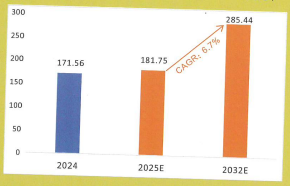
The global eyewear market size exceeded 170 billion US dollars in 2024 and is expected to reach 285 billion US dollars in 2032, with a compound annual growth rate of 6.7% during this period. This growth trend far exceeds the average growth rate of global fast-moving consumer goods. Eyewear products are accelerating their transformation from "optional consumption" to "daily necessities".
Global eyewear market size from 2024 to 2032 (Unit: billion US dollars)
(Source :Fortune Business Insights,2025.08)
The core driving forces for market growth come from three aspects:
First, the global population with visual impairments continues to expand. Data from the World Health Organization shows that at least 2.8 billion people worldwide need vision correction services, among which over 1 billion have unmet needs.
Second, the digital lifestyle has brought about greater demands for eye health. By 2024, the average daily screen usage time of global consumers had reached 6.6 hours, an increase of over 50% compared to 2019. The prolonged use of electronic devices has led to a rapid rise in the demand for functional glasses with anti-blue light and anti-fatigue features. As a fashionable item, the frequency of consumers purchasing glasses has significantly increased, further unleashing the market's consumption potential.
Thirdly, the fashion attribute has driven up the frequency of consumption. Glasses are no longer durable items worn for many years but have become fashionable items that match clothing. The frequency of consumers purchasing glasses has significantly increased, further unleashing the market potential.
2. Mature markets lead the trend, while the potential of emerging markets is exploding
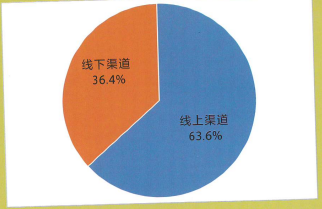
The global eyewear market shows obvious regional differentiation. Mature markets such as Europe and America are leading the high-end trend with fashion and environmental protection innovations. North American consumers value functionality and fashion, especially the younger generation. When making purchases, they pay more attention to brand tone and design sense. Online consumption dominates the European market, with a relatively high premium for functional lenses and an annual growth rate of 8% for sustainable eyewear.
Revenue share of the European Eyewear market in 2024 (by channel)
(Source :Global Market Insights,2025.02)
The Asia-Pacific region shows a "dual-speed" growth trend in both mature and emerging markets. Mature markets such as Japan attach great importance to quality and personalization, while emerging markets such as India pay more attention to cost performance. Although the current scale of the Latin American and African markets is limited, they have considerable growth potential. The expansion of the middle class is the main driving force for demand growth. Take Brazil as an example. In 2023, the per capita income of Brazilian households increased by 11.5%. The brand awareness of middle-class consumers has strengthened, driving a significant increase in the purchase volume of functional and fashionable glasses.
3. Functional innovation and scenario adaptation drive the growth of subcategories
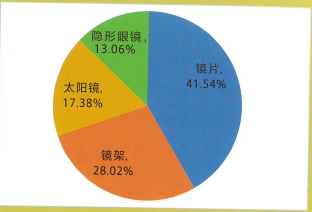
Lenses, as the core carrier of eyewear functions, hold the largest share in the global eyewear market, with a global market size reaching 60.74 billion US dollars in 2024. The demand for functional products such as anti-blue light, anti-fatigue, and intelligent zoom is on the rise, and the continuous development of niche categories is driving the market towards specialization and refinement.
The global eyewear market is showing a trend of differentiated development in its sub-categories:
The frame market pays more attention to materials and design. Metal materials still dominate the market. Acetate fiber materials are favored by the fashion industry for their diverse colors and textures. Eco-friendly materials have a relatively high penetration rate in the European market.
Consumers of sunglasses place more emphasis on the design sense of the products. Co-branded styles often have significant premium pricing power. In addition, the average sunglasses consumer owns 2.3 pairs, which is much higher than the 1.2 pairs of optical glasses, reflecting the purchasing characteristics driven by fashion consumption.
The market share of each segment in the global eyewear industry in 2024
(Source :Statista,2025)
4. Insights into New Consumption Trends in the Eyewear Market
The global eyewear market is in a period of rapid transformation. New consumption trends such as fashion expression, technology integration, and green development are constantly emerging, profoundly influencing product design and channel layout.
4.1 Fashion Accessories and Personalized Customization
Glasses have become an important medium for consumers to express their individuality and aesthetic sense. Young people especially pay attention to the matching of glasses with clothing and occasions, and are willing to pay a premium for unique designs. With the popularization of personalized customization services, consumers can independently choose the color of the frame, the texture of the temple, and even engrave words on the frame to create a unique personal item. The development of technologies such as 3D printing has driven small-scale and rapid production, significantly enhancing order conversion and customer satisfaction.
4.2 Intelligent Upgrade and Health Protection
The functions of glasses are no longer limited to vision correction but have expanded to enhance visual experience and overall performance. Against this backdrop, the category of smart glasses has risen rapidly. The global shipment of smart glasses is expected to reach 12.05 million units in 2025, with audio and shooting products experiencing a year-on-year growth of 101.9%, marking the gradual popularization of smart glasses. Health protection has become a core demand. In the face of the increasingly serious problem of digital eye fatigue, the demand for anti-blue light and anti-glare lenses has soared.
4.3 Environmental Sustainability and material Innovation
The improvement of environmental awareness has significantly influenced consumer choices, and sustainable materials have become a new focus of market competition. Recycled plastics, bio-based acetate fibers and biodegradable materials are widely used in the manufacturing of spectacle frames, and lens materials are also gradually achieving environmental protection and innovation. In strictly regulated markets such as the European Union, environmentally friendly products have a high acceptance rate and have become an important means of brand differentiation. Sustainability is not only reflected in the material end, but also extends to the production process and packaging links, in line with the overall trend of green consumption.
4.4 Channel Integration and Content Marketing
The deep integration of online and offline has become the mainstream model of eyewear retail. Meanwhile, the influence of social media on consumer decisions is becoming increasingly significant, and content preferences on different platforms show obvious differences. Professional content such as eyewear purchasing guides helps consumers make more efficient decisions. Lightweight and contextualized entertainment content enhances product appeal and improves marketing effectiveness through scenario-based narratives.
5. China's eyewear exports continue to lead, and emerging brands are accelerating their overseas expansion
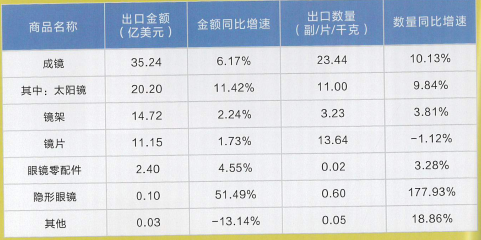
As the world's largest supplier of eyewear, China, relying on its complete industrial chain and manufacturing upgrades, has continuously led the export market. According to the statistics of the China Optical Association, the cumulative export value of China's optical products in 2024 was approximately 7.736 billion US dollars, representing a year-on-year growth of 4.42%. From the perspective of subcategories, sunglasses stand out the most, with both export value and quantity growth rates ranking among the top.
The export situation of eyewear products from January to October 2024
(Source: China Optical Association)
While the export volume has been steadily increasing, a number of Chinese eyewear brands with differentiated competitiveness are making their mark in the international market. For instance, Shanghai Kangnaite has become a Chinese brand with significant influence in the global resin lens market, thanks to its advantages in the field of resin lenses. ZEELOOL, which takes online channels as its core, has achieved an annual sales volume of 50 million US dollars by relying on fashionable design and high cost-performance products. XREAL, which focuses on the niche market of augmented reality (AR) glasses, has topped the global AR glasses sales chart for three consecutive years.
At present, China's eyewear export scale has ranked first in the world, but there is still considerable room for improvement in brand premium and market share in niche fields such as high-end optical frames and professional functional eyewear. Meanwhile, emerging markets such as the Middle East and Africa are experiencing a decline
The rapid growth in demand for eyewear has brought new development opportunities to Chinese eyewear enterprises.

 Slovenian
 Slovak
 Latvian
 Bosnian
 Icelandic
 Ukrainian
 Georgian
 Serbian
 Croatian
 Belarusian
 Romanian
 Estonian
 Hungarian
 Czech
Czech
 Catalan
 Norwegian
 Lithuanian
 Albanian
 Hindi
Hindi
 Italian
 Finnish
 Arabic
 Danish
 Bulgarian
 Thai
Thai
 Polish
 Swedish
 Greek
Greek
 Portuguese
 Dutch
Dutch
 Turkish
 Russian
 Deutsch
 French
 Korean
 Japanese
 English






Leave A Comment